
Implantes dentales sevilla
Implantology
Recuperamos la estética de tu boca y le ayudamos a
masticar con normalidad gracias a nuestros implantes dentales
Enduring smiles
Dental implants are small titanium structures that are surgically placed in the jaw or jaw bone to replace the roots of missing teeth. Once integrated with the bone, they act as a solid base for mounting artificial dental prostheses, such as crowns, bridges or dentures, restoring dental function and aesthetics.
Dental implants offer different advantages such as durability, improved functionality, aesthetics, bone preservation, and ease of care.
In general, most people who have lost one or more teeth may be candidates for dental implants. However, it is essential to have adequate oral health and sufficient bone density for implants to be successful. A qualified dentist can evaluate each case individually to determine eligibility.

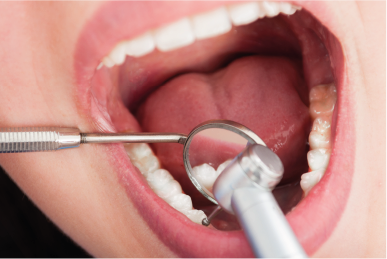
Dental implant placement process
01. Evaluation and planning
The first step is a thorough evaluation of the patient's oral health. The dentist will perform a clinical examination, review medical and dental history, and take x-rays and CT scans to evaluate the quantity and quality of bone available for implant placement. The patient's expectations will also be discussed and the process explained in detail.
02. Tooth extraction (if necessary)
In the event that the patient has a damaged or diseased tooth that needs to be replaced with an implant, the tooth may need to be extracted before proceeding with implant placement. This will be done at a separate appointment, and time will be given for the extraction site to heal properly before implant placement.
03. Implant placement surgery
Once the patient is determined to be a suitable candidate for dental implants and planning is complete, surgery is scheduled to place the implant. The surgery is usually performed under local anesthesia or sedation to ensure patient comfort.
04. Healing period (osseointegration)
After surgery, a crucial healing period begins. During this time, which can vary between 3 and 6 months, the implant integrates with the bone in a process called osseointegration. During this phase, bone grows around the implant, securing it firmly in place.
05. Placement of the abutment and prosthesis
Once the implant has healed and fused with the bone, the abutment or connector is placed on the implant. This component is what connects the implant to the dental prosthesis.
Finally, the final dental prosthesis (crown, bridge or denture) is created and placed that will fit the abutment in a personalized way, restoring the appearance and function of the lost teeth.
06. Long-term follow-up and care
After completing the implant placement process, the dentist will schedule follow-up appointments to evaluate the health of the implant and ensure that the patient is adjusting well to the dentures. It is essential to maintain routine good oral hygiene and make regular visits to the dentist to ensure the durability and long-term success of your dental implants.
Types of dental implants
ACCORDING TO THEIR PLACEMENT
Subperiosteal implants
Unlike traditional dental implants that are inserted into the jawbone or maxilla (endosseous implants), subperiosteal implants are placed under the periosteum, which is the fibrous layer that covers the bone. This location allows the implant to rest on a broader bone surface and distribute the chewing load over a greater area, which may be beneficial in patients who have a limited amount of bone.
Pterygoid implants
The pterygoid implant technique involves placing the implants in the area of the pterygoid bone, which is located near the sphenoid bone, a structure of the skull located in the back of the upper jaw. These implants anchor dentures in patients who have severe atrophy of the jaw bone and who are not suitable candidates for conventional implants due to bone insufficiency in that region.
Zygomatic implants
These implants are anchored in the zygomatic bone, which is a large, dense facial structure located on the side of the face, just below the eyes. Unlike traditional dental implants that are inserted into the upper jaw, zygomatic implants extend from the zygomatic bone to the upper jaw, providing a solid foundation for the placement of dentures.
Endosseous implants
Endosseous implants, also known simply as dental implants, are devices used to replace missing or missing teeth. These implants are designed to be placed within the jaw bone, providing a solid and stable base for the placement of dental prostheses, such as crowns, bridges or dentures.
ACCORDING TO THEIR FORM
Screw shaped
Screw-shaped dental implants are the most common type of endosseous implants used in dentistry. These implants resemble a screw or cylinder and are designed to be inserted into the bone of the jaw or maxilla, providing a stable base for replacing missing teeth.
With cylindrical shape
Cylindrical-shaped dental implants are another common type of endosseous implants used in dentistry. Like screw-shaped implants, they are designed to be inserted into the jawbone or maxilla, providing a stable base for the placement of dentures.
Laminate
These implants usually give excellent results when replacing a central incisor at the level of the upper jaw, especially when the bone is quite wide and deep. It is indicated for patients with little alveolar bone and dentists do not recommend its use in case the tooth is completely lost.
Types of dental implants
ACCORDING TO THEIR PLACEMENT
Subperiosteal implants
Unlike traditional dental implants that are inserted into the jawbone or maxilla (endosseous implants), subperiosteal implants are placed under the periosteum, which is the fibrous layer that covers the bone. This location allows the implant to rest on a broader bone surface and distribute the chewing load over a greater area, which may be beneficial in patients who have a limited amount of bone.
Pterygoid implants
The pterygoid implant technique involves placing the implants in the area of the pterygoid bone, which is located near the sphenoid bone, a structure of the skull located in the back of the upper jaw. These implants anchor dentures in patients who have severe atrophy of the jaw bone and who are not suitable candidates for conventional implants due to bone insufficiency in that region.
Zygomatic implants
These implants are anchored in the zygomatic bone, which is a large, dense facial structure located on the side of the face, just below the eyes. Unlike traditional dental implants that are inserted into the upper jaw, zygomatic implants extend from the zygomatic bone to the upper jaw, providing a solid foundation for the placement of dentures.
Endosseous implants
Endosseous implants, also known simply as dental implants, are devices used to replace missing or missing teeth. These implants are designed to be placed within the jaw bone, providing a solid and stable base for the placement of dental prostheses, such as crowns, bridges or dentures.
ACCORDING TO THEIR FORM
Screw shaped
Screw-shaped dental implants are the most common type of endosseous implants used in dentistry. These implants resemble a screw or cylinder and are designed to be inserted into the bone of the jaw or maxilla, providing a stable base for replacing missing teeth.
With cylindrical shape
Cylindrical-shaped dental implants are another common type of endosseous implants used in dentistry. Like screw-shaped implants, they are designed to be inserted into the jawbone or maxilla, providing a stable base for the placement of dentures.
Laminate
These implants usually give excellent results when replacing a central incisor at the level of the upper jaw, especially when the bone is quite wide and deep. It is indicated for patients with little alveolar bone and dentists do not recommend its use in case the tooth is completely lost.


 English
  Spanish